Developing a Design Blog & Case Study Assistant GPT
A reflection on designing, testing, and refining a custom GPT to help product designers stay informed through AI-assisted content curation.
01
Introduction
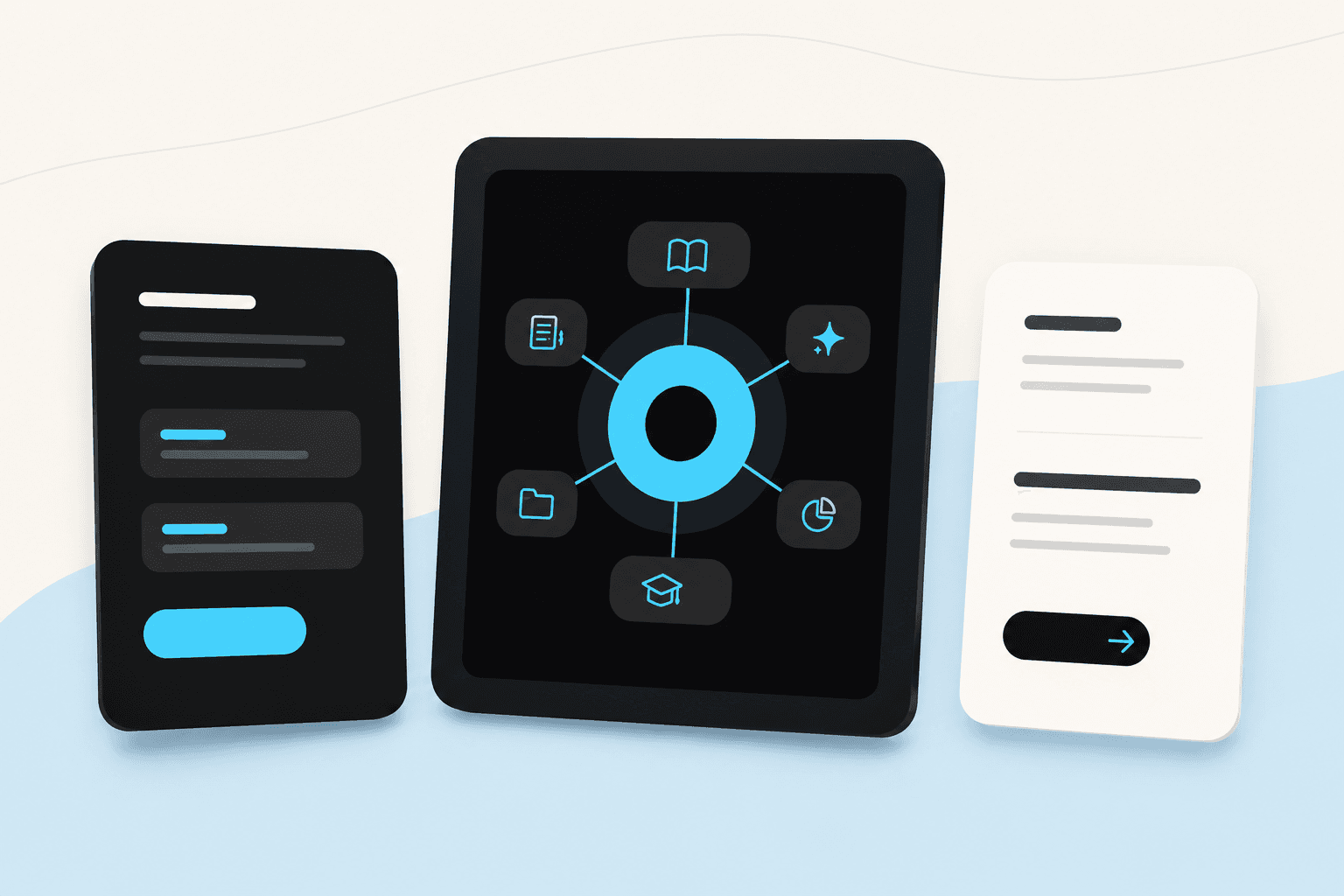
This project explores the development of a custom GPT designed to help designers stay current with industry knowledge. By transforming lengthy design articles into structured, actionable insights.
02
The Problem
Product designers often follow many blogs, agencies, case study libraries, newsletters, and product teams. The information can be valuable, but it is scattered across too many places.
Reading everything is unrealistic. Because of that, important design patterns, product decisions, and practical lessons are easy to miss, especially when designers are also balancing research, delivery, collaboration, and craft.
03
My Objective
My goal was to develop a custom GPT that could summarize design blogs and case studies into concise, structured insights while maintaining context and usefulness for product designers.
04
My Process
Step 1
Define the problem
I started by clarifying the challenge I wanted the assistant to solve: product designers need to keep learning from blogs, case studies, studios, and product teams, but the useful signals are spread across too many places.
Step 2
Design the initial prompt
I wrote the first version of the prompt around the assistant's role, audience, content types, and output format. The goal was to make the GPT summarize design writing in a way that was structured, concise, and useful for product designers.
Step 3
Test the responses
I tested the assistant with different design articles and case study topics. Some outputs were clear and easy to scan, but others became too broad, assumed context, or summarized content without explaining why it mattered to a designer.
Step 4
Refine the assistant
I refined the prompt to ask for clearer sections, stronger context, practical takeaways, and a more design-specific point of view. The prompt evolved from a generic summarizer into a more focused content curation assistant.
Step 5
Evaluate the output
Finally, I reviewed whether the responses would actually help a designer decide what to read, remember, or apply. This evaluation step became as important as generation because useful AI output still needs human judgment.
05
What I Learned
- Broad prompts still produce confident answers, but they often assume context.
- Prompt engineering is an iterative process rather than a one-time activity.
- The usefulness of AI depends heavily on evaluation, not only generation.
- Personalized context significantly improves the quality of the results.
06
Future Improvements
- Connect with RSS feeds from design blogs and studios.
- Support multiple content sources across articles, case studies, and newsletters.
- Generate weekly digests with clear themes and practical takeaways.
- Personalize recommendations based on a designer's role, interests, and learning goals.
- Test the assistant with real designers to understand what makes the summaries useful.
07
Reflection
Developing this assistant changed the way I think about AI. I initially viewed prompt writing as the primary challenge, but I found that evaluating the quality of AI-generated output and refining the workflow required much more critical thinking.
This experience reinforced that effective AI solutions rely on continuous iteration and human judgment rather than a single well-written prompt.
Access the tool
Design Blog & Case Study Assistant GPT
I built this GPT to help product designers turn scattered articles and case studies into clearer summaries, practical takeaways, and design-aware insights.